Touch Grass
Community-driven Mobile App Concept
Date
September - December 2025
Role
UX / UI Designer
What I did
User Experience Design
User Interface Design
Research
Prototyping
User Testing
The Problem
The current state of fitness culture presents significant barriers of entry to those starting their fitness journey.
Exercising, including attending classes and going to the gym, can feel intimidating and overwhelming for many beginners. Not knowing how to use equipment, performing exercises incorrectly, or fear of being judged discourages people from getting started. In addition, there is often a lack of affordable options for personal training, and group fitness classes can sometimes move too fast for beginners to keep up with. With so much contradictory information online about nutrition and exercise, people aren't sure of what to trust and might just quit altogether.
The Opportunity
How might we make fitness more approachable for people who are just starting their fitness journey?
While analyzing the current market for mobile fitness apps, I found that there were no beginner apps offering simple, supportive guidance that would make going to the gym less intimidating or help people commit to their fitness journey. Many apps in the market are either geared towards high-intensity fitness that can be overwhelming to beginners, while others are focused on dieting and weight-loss, which turns away those who want to live a healthy lifestyle while maintaining their weight. I saw this gap in the market as an opportunity for our solution to shine.
User Research
Defining the Demographic
While I knew the general target demographic for this project would be college students aged 18-26, I initially examined the motivations and obstacles of three key groups based on activity levels and experience in order to clearly define the target audience: college students that do not go to the gym, college students who went to the gym infrequently and inconsistently, and college students who previously attended the gym regularly but stopped. Ultimately, I decided to focus on potential users who are sedentary or lightly active, because beginners experience more barriers to a regularly active lifestyle than those who go to the gym often.
Research Insights
Redefining Fitness
After forming insights based on user needs, goals, and pain points, I realized fitness looks, feels, and means different for everyone. For some, fitness means going to the gym often, while for others, fitness means walking to and from campus every day. We refined our mission to support all kinds of movement regardless of the types of physical activity they prefer instead of limiting the project’s scope to gym-focused fitness.
In addition to this reframe, I condensed my research to three major insights.
Community
Working out in a group can fuel motivation and encourage accountability. Our user interviews suggested that having a workout buddy or sense of community has helped people feel more confident and supported in a gym setting, where it is common to feel intimidated, overstimulated, and lost especially for beginners.
Busy Lifestyles
Young adults want to stay active but struggle to be consistent due to poor time management and other priorities in life, such as school, work, and social relationships. My interview participants genuinely want to be active, but struggle to fit time for purposeful movement between these priorities.
Tracking & Habits
In my interviews, I found that my participants have used fitness and nutrition apps, but stop when they feel too repetitive or negatively impact their relationship with food. Fitness apps should make tracking simpler and more supportive by designing systems that celebrate flexible consistency rather than enforcing strict routine and prevent obsessive behaviors by changing the metrics from quantitative to qualitative, while also highlighting the emotional benefits of fitness and health.
Ideation
Ideation
With these insights in mind, I took to the drawing board to brainstorm design features that could solve the problem. The possibilities seemed nearly endless; my teammates and I explored solutions that applied to all aspects of fitness, from shared calendars to custom workout routines.
Subtitle
Feature Scoping
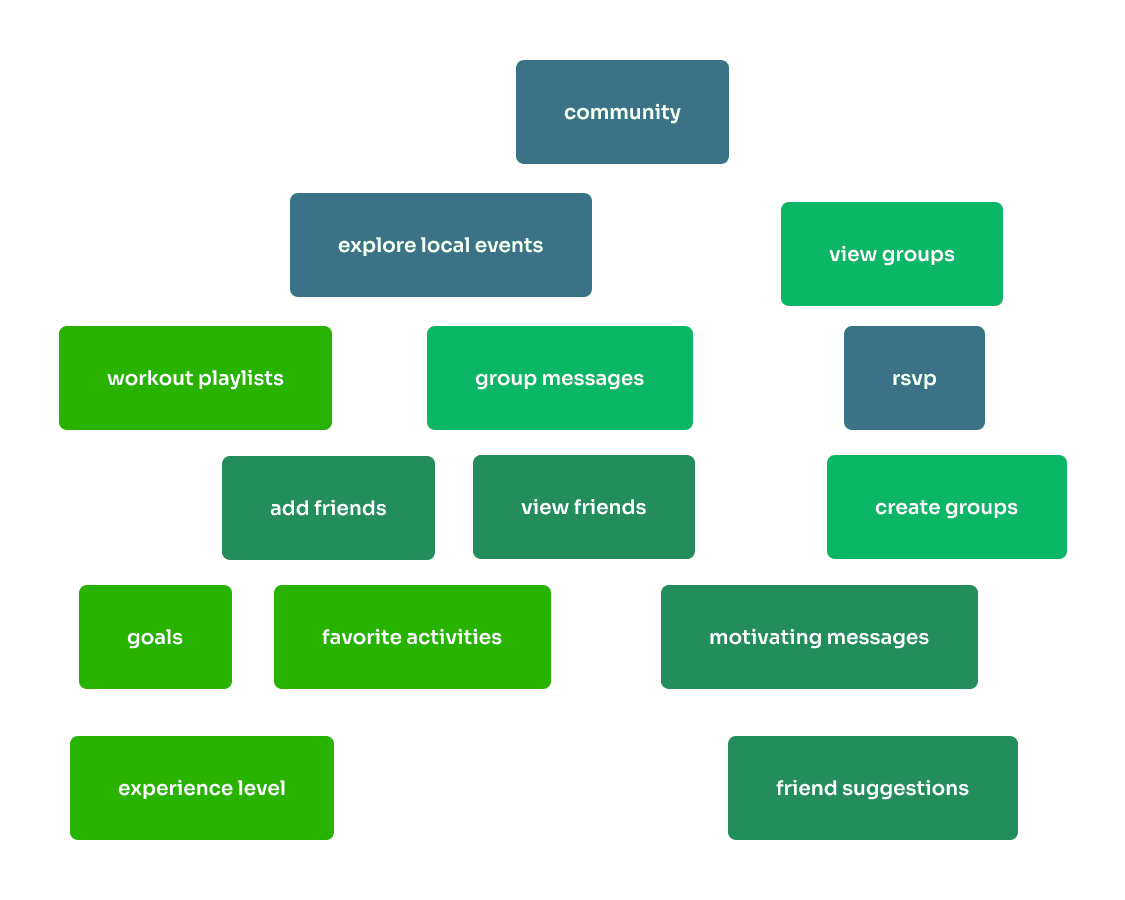
After much deliberation, we decided to focus on features that supported a flourishing community of fitness fans. The social aspects of fitness, including mutual learning, mutual accountability, and shared joy, helps create a welcoming environment for beginners to start their fitness journey. These features came together into an accessible mobile app concept.
Subtitle
User Flow & Interaction
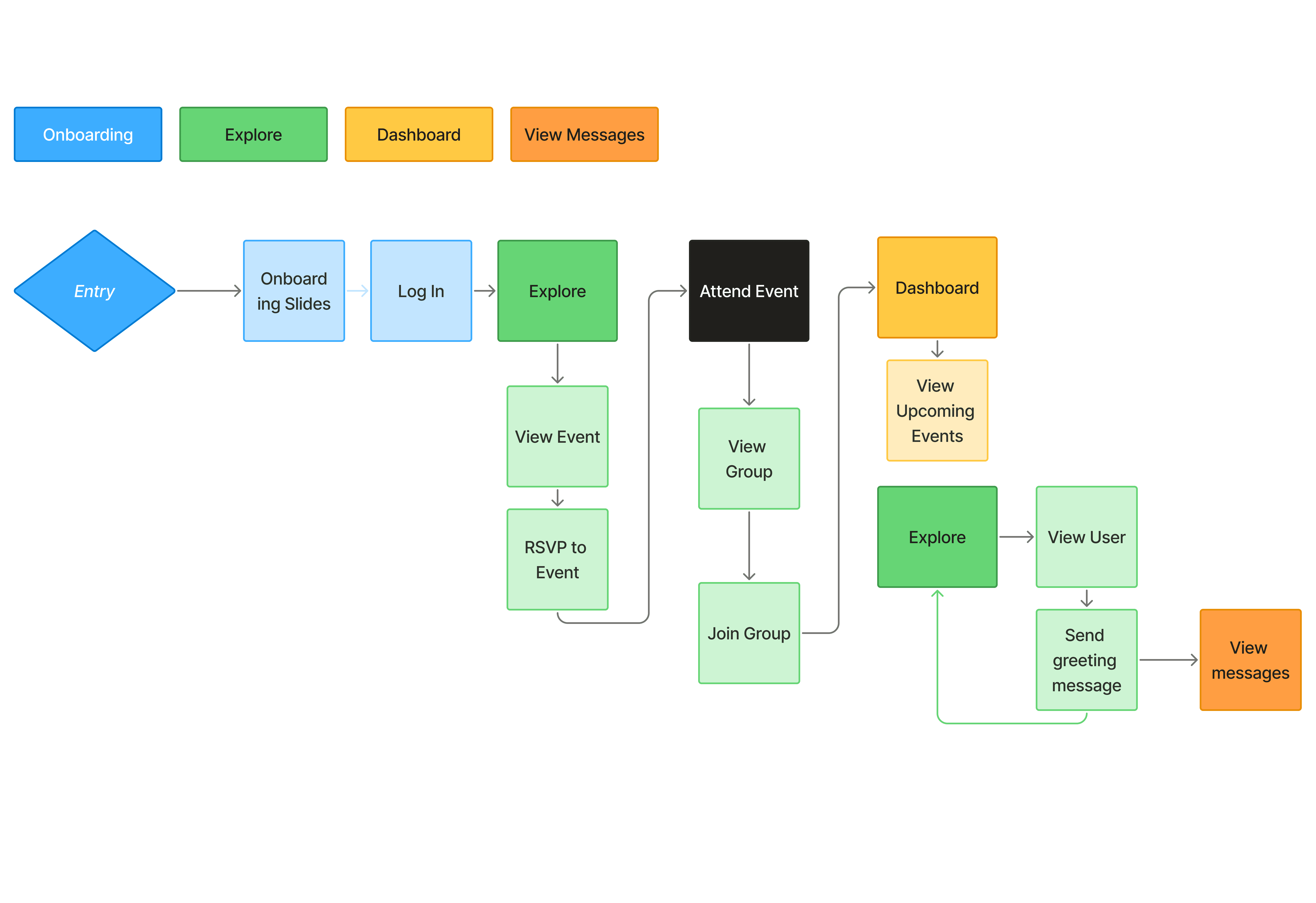
This app isn’t meant to be used for hours at a time, it’s designed to foster community engagement that starts on the app and ends in real-life movement. I crafted a user flow that incorporates key scenarios that lead to physical movement with peers without the need for a screen. With these flows, I created low-fidelity wireframes that incorporated the concept’s key features in a a casual manner that allowed users to be able to put down their phones at any time to begin their movement.
The Final Solution
Touch Grass is a mobile app designed to provide a space for young adults of all fitness experience levels to meet others, discover new interests, and encourage healthy habits.
The app offers features for individuals to connect with others through shared interests and fitness goals by joining groups and events hosted by vibrant & local communities built around the collective joy of movement.
The mission of Touch Grass is to remove the barrier preventing young adults from pursuing their fitness goals due to obstacles like lack of knowledge, low motivation, insecurity, and guilt, and help them build healthy and consistent habits through mutual accountability, shared purpose, and community belonging.
Accounta-buddies near you
Adding Friends
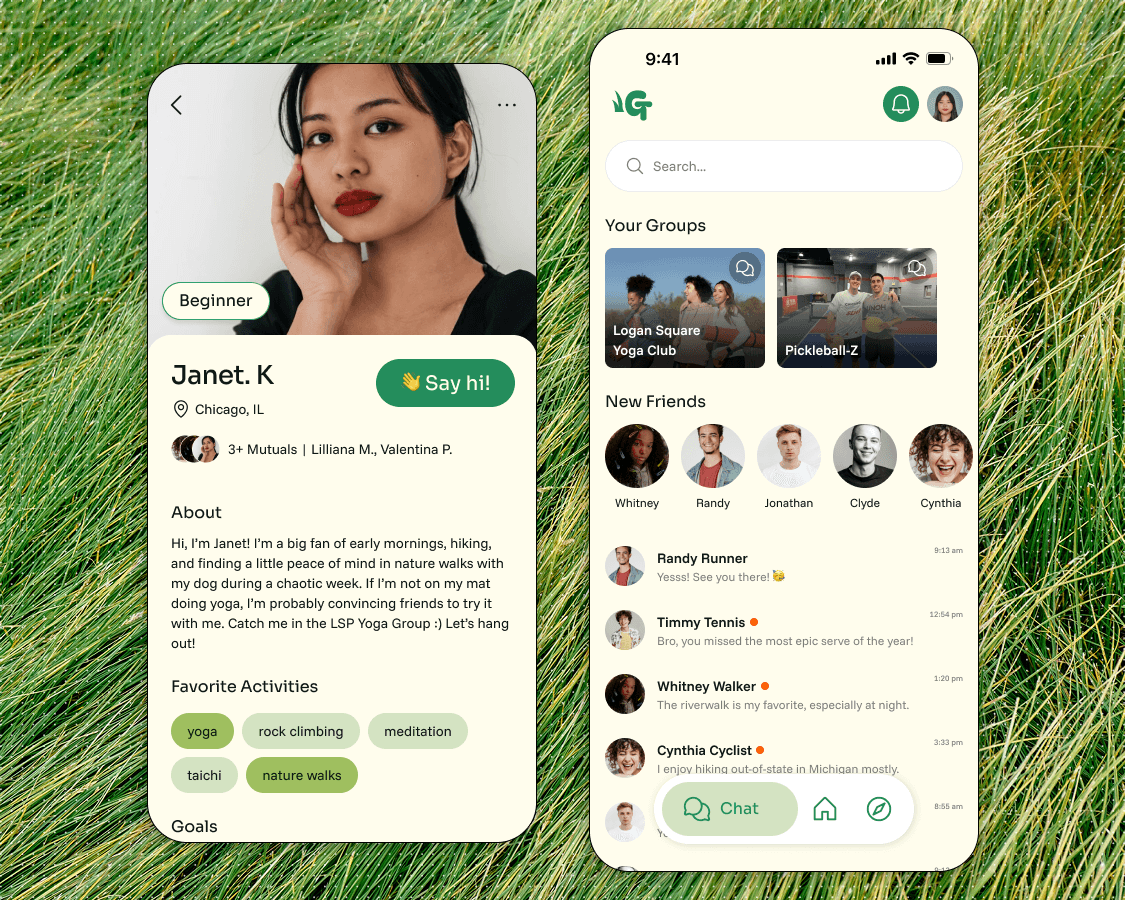
Users can discover and add friends through the explore page, as well as through groups and events. Each user has a detailed profile page with tags for interests and favorite activities. Users can also message each other directly to chat safely about fitness and plan get-togethers.
Fostering collective joy in movement
Joining Groups
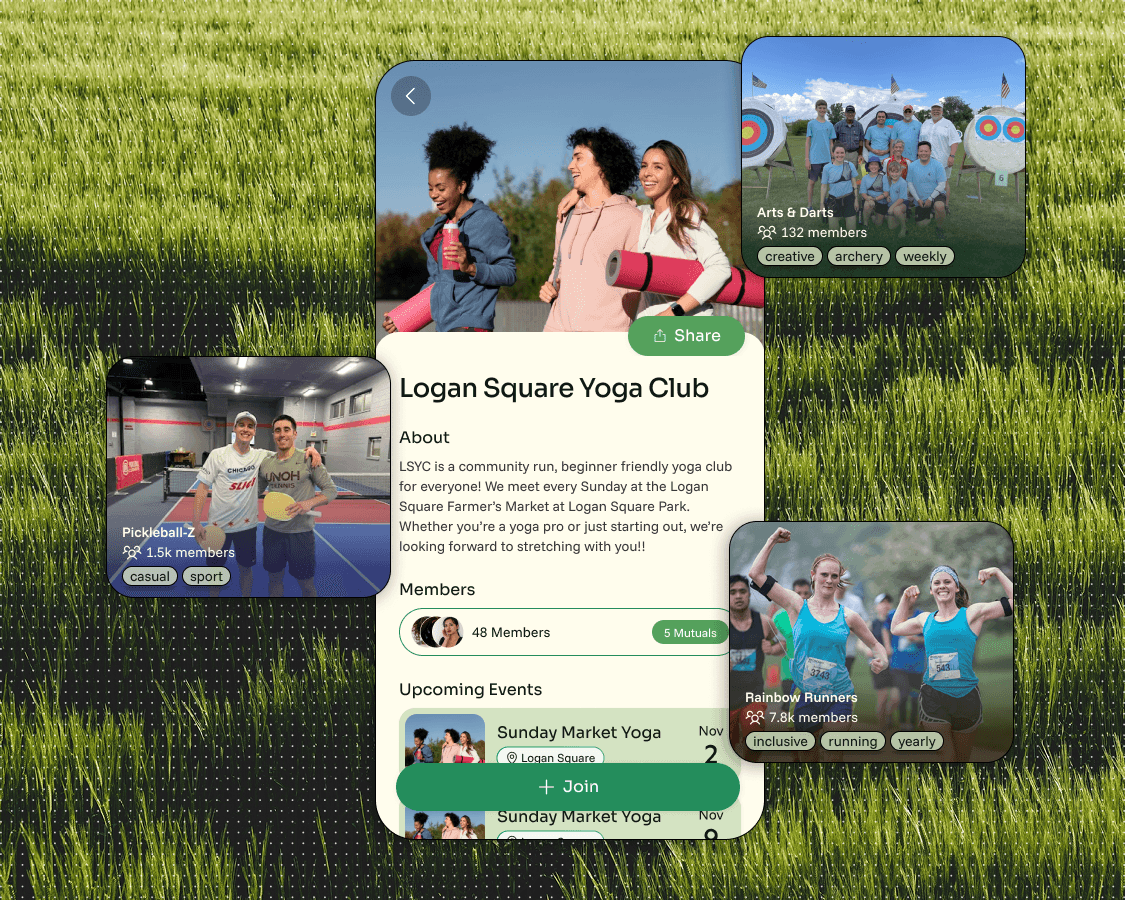
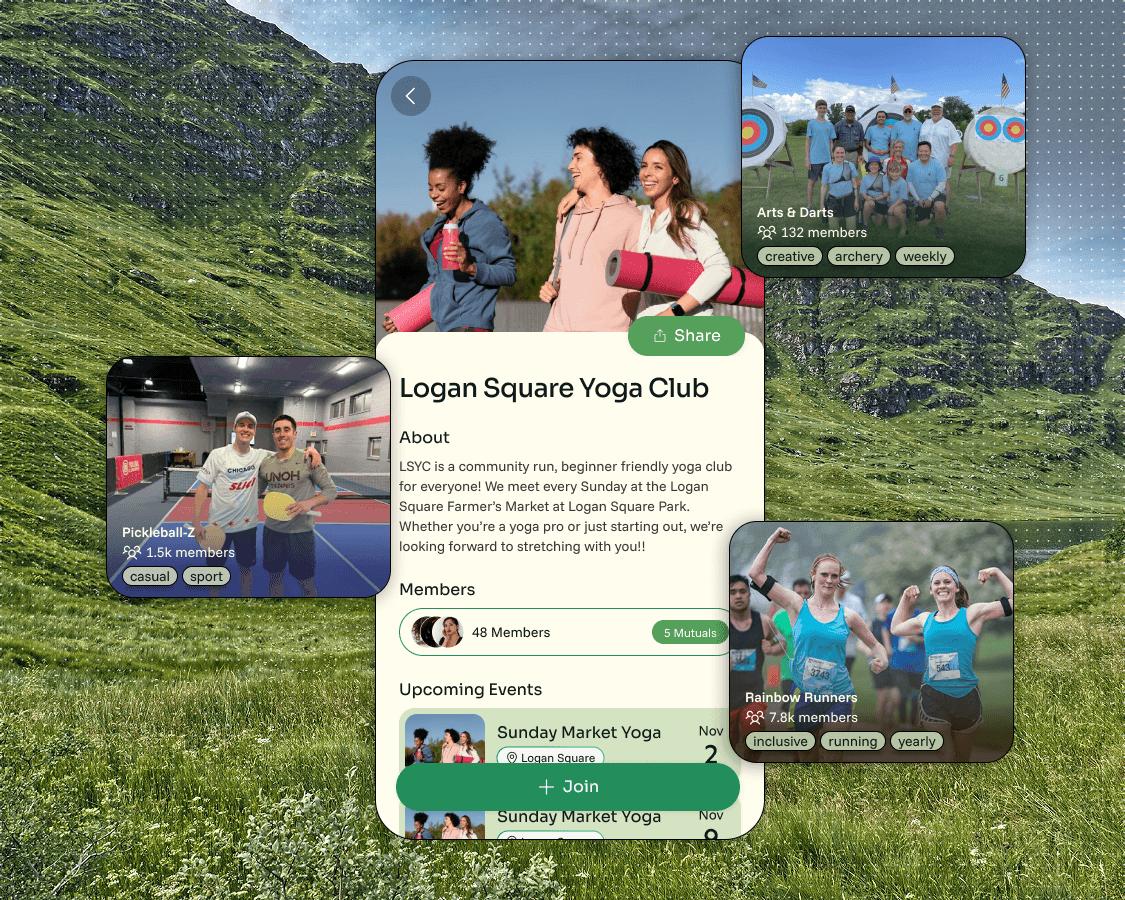
Groups foster a community among users with common interests and goals. To maintain this passion, users in groups can chat with each other and participate in polls, challenges, and events hosted by the group’s admins.
Subtitle
Events
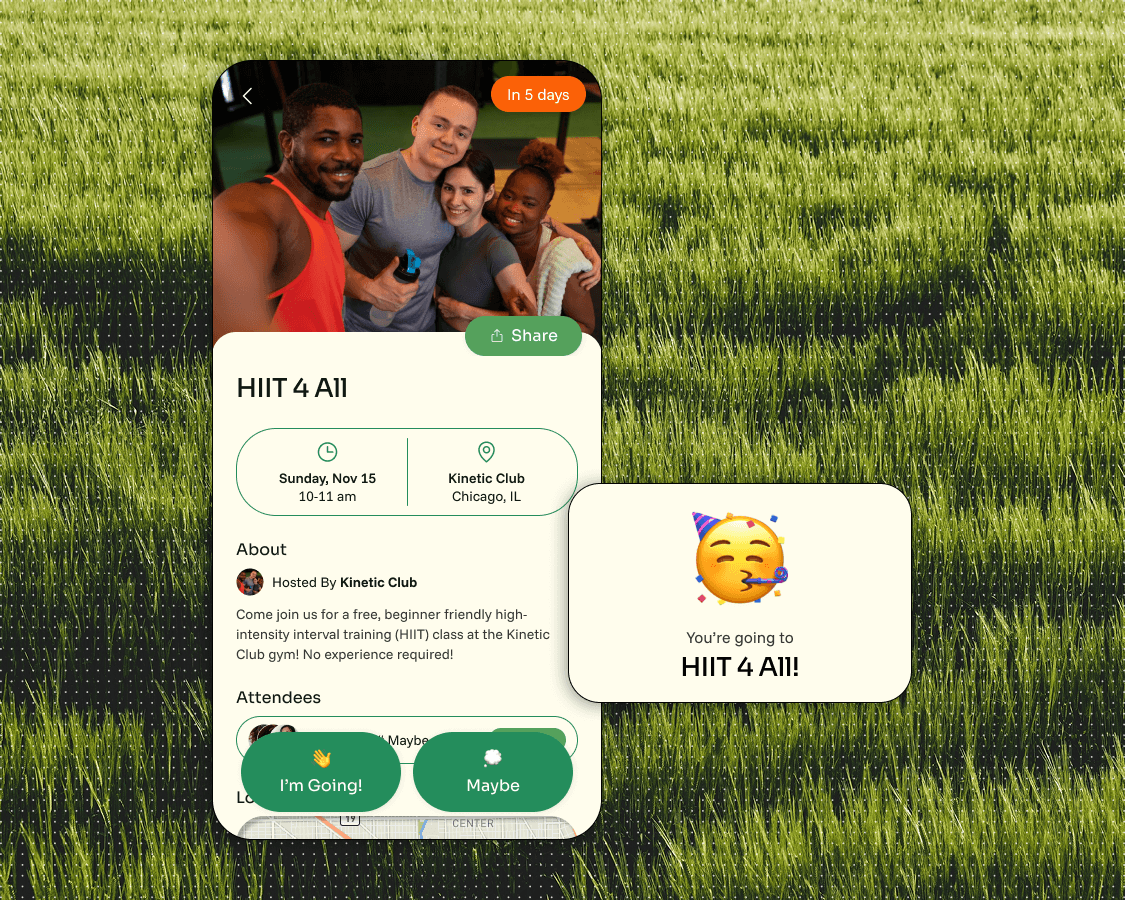
Events encourage the local community's meaning-making and collective movement. Groups can host public events that are open to all, regardless of being a group member or not. Users can view and RSVP to local events effortlessly.
Final Thoughts
What's Next?
Delivering a solid, well-rounded experience in 15 weeks was certainly challenging. I’m grateful for my teammates, classmates, research participants, and instructors; all helped to create a meaningful project.
What I learned
Constraints are opportunities for innovation
While the 15 weeks flew by, I optimized tasks and activities to focus on what mattered the most in order to have a working and well-researched prototype ready to demo by the final week.
Community is a powerful force
Examining community as something that is not just a way for people to connect, but to improve each other’s lives through the shared joy of movement, was definitely full of wow-moments. Designing tools to help bring these communities to life was both challenging and rewarding.
If I had more time, I would…
Reach out for more diverse perspectives
I would have liked to conduct more user interviews. It would have helped to have a more comprehensive understanding of our target demographic’s pain points, experiences, and personal fitness journeys.
Solidify the experience with more user testing
I also would have liked to conduct more user testing sessions to solidify the flow and usability of our prototype.